
High Protein Foods Vegetarian: 20 Best Vegetarian Protein Sources in India
Introduction
Are you vegetarian and wondering how to get enough protein from your everyday diet?
You are not alone.
Many beginners believe that getting enough protein is difficult without eating chicken, fish, or eggs. But that is not necessarily true. There are plenty of high protein foods vegetarian options that can provide protein while also fitting naturally into an Indian diet.
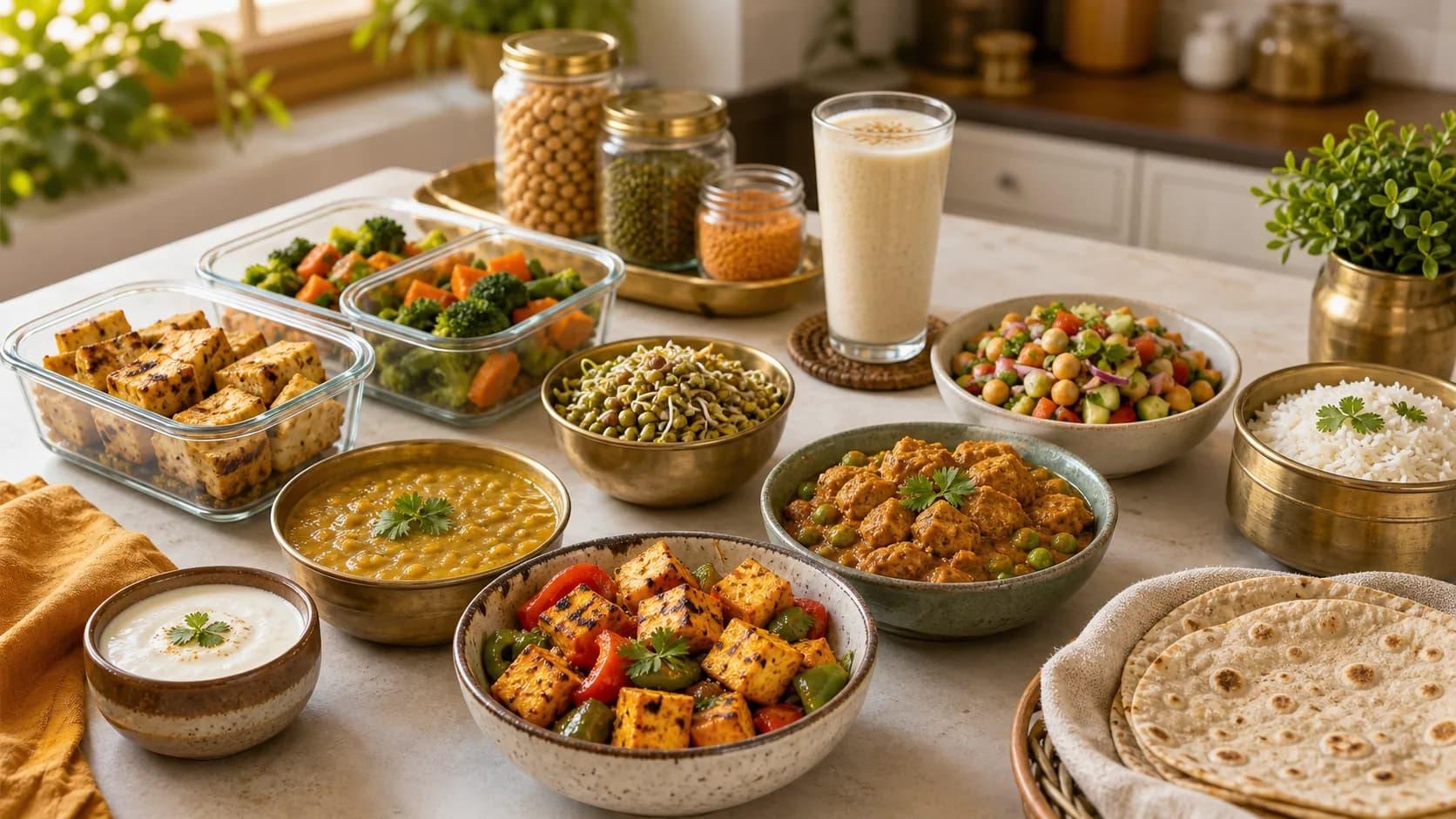
Foods such as dal, chickpeas, rajma, soy chunks, paneer, tofu, curd, milk, peanuts, beans, and seeds can all contribute to your daily protein intake.
The real challenge is not simply finding a protein-rich food. It is understanding how much protein you need, which foods are good sources, how to combine them, and how to distribute them throughout your day.
This beginner’s guide to high protein foods vegetarian will help you understand vegetarian protein in simple language.
Whether your goal is muscle gain, weight management, better nutrition, or simply eating a healthier diet, this article will show you practical ways to add more protein to your meals.
Why Protein Is Essential for Your Daily Health
Protein is one of the three major macronutrients your body needs, along with carbohydrates and fats.
Think of protein as one of the basic building materials your body uses every day.
Protein contributes to the maintenance and repair of body tissues and is involved in many important functions, including enzymes, hormones, and immune-related processes.
This means protein is not only important for people who go to the gym.
You need protein whether you:
- Exercise regularly
- Want to maintain muscle
- Are trying to build muscle
- Want to manage your weight
- Have an active lifestyle
- Simply want to maintain a balanced diet
A common mistake among beginners is focusing only on calories and ignoring protein.
For example, someone might eat roti, rice, potatoes, snacks, tea, and biscuits throughout the day and still consume plenty of calories while getting less protein than they need.
This is why choosing high protein foods vegetarian options can be useful.
The good news is that Indian cuisine already contains many protein-rich foods. You don’t need to completely change your traditional diet.
Instead, you need to become more intentional about adding a protein source to your meals.
1. How Much Protein Do You Need Daily?
This is probably the first question you should answer before planning a high-protein diet.
The amount of protein you need depends on several factors, including:
- Body weight
- Age
- Physical activity
- Exercise routine
- Fitness goals
- Overall diet
- Health condition
According to the ICMR-NIN Dietary Guidelines for Indians, the recommended dietary allowance for protein for healthy adults is 0.83 grams per kilogram of body weight per day.
For example:
| Body Weight | Approximate RDA |
|---|---|
| 50 kg | 41.5 g/day |
| 55 kg | 45.7 g/day |
| 60 kg | 49.8 g/day |
| 65 kg | 54.0 g/day |
| 70 kg | 58.1 g/day |
| 75 kg | 62.3 g/day |
| 80 kg | 66.4 g/day |
These figures are general recommendations for healthy adults. They should not be treated as a personalized diet prescription.
What if you exercise?
If you regularly perform resistance training, sports, or other demanding physical activity, your protein needs may differ from the basic RDA.
Someone trying to build muscle should consider their training, calorie intake, body weight, and total protein intake rather than simply following the minimum recommendation.
The important lesson for beginners is simple:
Don’t randomly chase extremely high protein intake. First understand your approximate requirement and then build your diet around it.
If you have a medical condition or specific nutritional needs, speak with a qualified dietitian or healthcare professional.
2. Top 20 Best Protein Sources for Vegetarian
Now let’s look at some of the most useful high protein foods vegetarian options.
The following foods are especially practical for people living in India because many are affordable, easily available, and already part of traditional Indian cooking.
1. Soy chunks
Soy chunks are one of the most protein-dense vegetarian foods commonly available in India.
They are made from soy flour and are inexpensive, easy to store, and extremely versatile.
You can use soy chunks in:
- Curry
- Pulao
- Biryani
- Soy keema
- Sabzi
- Wraps
If you’re looking for convenient high protein foods vegetarian options on a budget, soy chunks are worth considering.
2. Soybeans
Soybeans are another excellent plant protein source.
Soy is particularly useful because it contains all nine essential amino acids.
You can use cooked soybeans in curries, salads, bowls, or other recipes.
Soy can also be processed into foods such as tofu and soy milk.
3. Paneer
Paneer is probably one of the most popular vegetarian protein sources in India.
The Indian Food Composition Tables list paneer at approximately 18.9 g protein per 100 g, although actual values can vary by preparation and product.
You can eat paneer as:
- Paneer bhurji
- Paneer tikka
- Palak paneer
- Paneer curry
- Paneer sandwich
- Paneer wrap
Paneer is useful, but remember that it can also contain considerable fat and calories.
4. Tofu
Tofu is made from soybeans and can be a useful alternative to paneer.
It works particularly well for people who want plant-based high protein foods vegetarian options.
Try tofu in:
- Stir-fries
- Curries
- Salads
- Wraps
- Tofu bhurji
Check the nutrition label because protein content varies between tofu products.
5. Lentils (Dal)
Dal is one of the most important vegetarian protein sources in Indian cuisine.
Popular options include:
- Moong dal
- Masoor dal
- Toor dal
- Chana dal
- Urad dal
Dal can be eaten with rice, roti, vegetables, or other foods.
One important point: 100 g dry dal and 100 g cooked dal are not nutritionally equivalent.
Cooking adds water, which changes the protein concentration per 100 g.
6. Chickpeas (Chana)
Chickpeas are another practical vegetarian protein source.
You can eat them as:
- Chole
- Chana masala
- Chana salad
- Chana chaat
- Roasted chana
They also provide carbohydrates and dietary fibre, making them useful for satisfying meals.
7. Rajma
Rajma, or kidney beans, is a popular Indian legume.
Rajma can be combined with rice to make a satisfying meal.
You can also add it to salads, wraps, and bowls.
Remember to properly cook kidney beans before eating them.
8. Moong
Moong is one of the most versatile pulses.
You can consume it as:
- Moong dal
- Sprouted moong
- Moong chilla
- Moong salad
- Khichdi
It can easily become part of breakfast, lunch, or a snack.
9. Black Chana
Black chana is affordable and widely available in India.
It can be boiled and used in:
- Chaat
- Salads
- Curries
- Snacks
It provides protein and fibre and can make meals more filling.
10. Besan
Besan, or chickpea flour, is another useful ingredient.
One of the easiest ways to use it is making besan chilla.
You can increase the protein content of your breakfast by pairing besan chilla with curd.
Other uses include:
- Kadhi
- Besan dosa
- Cheela wraps
11. Milk
Milk is a convenient protein source for vegetarians who consume dairy.
ICMR-NIN’s dietary guidance lists milk as a source of protein, with the exact amount varying by type.
You can include milk in:
- Oats
- Smoothies
- Breakfast
- Tea or coffee
- Post-workout meals
12. Curd
Curd is another easy way to add protein to an Indian meal.
You can eat it with:
- Rice
- Roti
- Paratha
- Oats
- Fruit
- Meals
For a higher-protein option, compare Greek yogurt or strained yogurt products using their nutrition labels.
13. Greek Yogurt
Greek yogurt is usually thicker than regular yogurt and can contain more protein per serving.
It can work as:
- Breakfast
- Snack
- Smoothie ingredient
- Dip
Look at the nutrition label because protein content can vary significantly between brands.
14. Peanuts
Peanuts are affordable, convenient, and contain protein.
You can use them in:
- Poha
- Peanut chutney
- Chaat
- Salads
- Snacks
However, peanuts are also high in calories because they contain a substantial amount of fat.
So they are nutritious, but portion size matters if you’re trying to control your calorie intake.
15. Peanut Butter
Peanut butter can be a convenient addition to breakfast or snacks.
Try it with:
- Whole-grain bread
- Roti
- Oats
- Banana
- Apple
Always check the ingredient list and nutrition label when buying packaged peanut butter.
16. Green Peas
Green peas are commonly considered a vegetable, but they also contribute protein to your diet.
You can add them to:
- Poha
- Pulao
- Upma
- Mixed vegetables
- Curries
- Salads
They are an easy way to make ordinary meals more nutritious.
17. Seeds
Seeds can contribute protein along with healthy fats and other nutrients.
Useful options include:
- Pumpkin seeds
- Sunflower seeds
- Sesame seeds
- Chia seeds
- Flaxseeds
You can add them to curd, oats, smoothies, or salads.
But because seeds are calorie-dense, they should generally complement your diet rather than become your only protein source.
18. Quinoa
Quinoa is a plant food that can be used instead of rice or other grains.
It can be prepared as:
- Quinoa pulao
- Salad
- Breakfast bowl
- Meal bowl
Quinoa can be useful, but you don’t need expensive foods to eat enough protein.
Traditional Indian foods such as dal, beans, soy, and dairy can already contribute significantly.
19. Beans
Different varieties of beans can contribute protein to a vegetarian diet.
You can add beans to:
- Curries
- Salads
- Wraps
- Rice dishes
- Soups
Eating a variety of pulses and beans is a simple way to make your diet more diverse.
20. Mixed Pulses
Instead of relying on only one pulse, you can combine different pulses.
For example:
Moong + masoor + chana dal
This gives you variety in taste and nutrients.
A mixed-dal preparation can become an easy part of lunch or dinner.
3. How to Balance Protein Intake Throughout the Day
Eating all your protein in one meal is not the easiest strategy.
Instead, try to include a protein source across your main meals and snacks.
You don’t need to make every meal perfect.
You simply need to make protein a regular part of your daily eating pattern.
for more info visit Youtube
Example Vegetarian High-Protein Day
Breakfast
Choose one:
- Besan chilla + curd
- Moong chilla + curd
- Oats + milk + seeds
- Paneer sandwich
- Greek yogurt + fruit
Lunch
A simple Indian meal could be:
Roti + dal + vegetables + curd
Another option:
Rajma + rice + salad + curd
Evening Snack
Choose:
- Roasted chana
- Milk
- Curd
- Peanuts
- Greek yogurt
- Sprouts
Dinner
Try:
Paneer + roti + vegetables
or:
Tofu + rice + vegetables
or:
Soy chunks + roti + salad
This approach makes high protein foods vegetarian eating much easier because you aren’t depending on one food to provide all your protein.
4. Common Myths About Vegetarian Protein
Myth 1: Vegetarians Cannot Get Enough Protein
False.
Vegetarian diets can provide protein from soy, pulses, beans, dairy, nuts, seeds, and other foods.
The important factor is choosing a varied diet and consuming enough food overall.
Myth 2: Plant Protein Is Always Poor Quality
Not necessarily.
Different plant foods have different amino acid profiles.
Soy is particularly useful because it provides all nine essential amino acids.
ICMR-NIN also recommends appropriate combinations of cereals and pulses because their amino acid patterns complement each other.
Myth 3: You Need Protein Powder to Build Muscle
False.
Protein powder is a convenient option, but it isn’t mandatory.
Many people can obtain protein through foods such as:
- Soy
- Paneer
- Tofu
- Dal
- Chickpeas
- Rajma
- Milk
- Curd
Your training, total calorie intake, protein intake, sleep, and consistency all matter for muscle development.
Myth 4: Dal Is Enough for All Your Protein
Dal is excellent, but depending on only one food isn’t necessary.
A better approach is variety:
Dal + soy + beans + dairy/tofu + nuts/seeds
This makes your diet more diverse.
Myth 5: High Protein Means Unlimited Protein
No.
More protein isn’t automatically better.
Your requirement depends on your body and lifestyle.
The goal should be to consume an appropriate amount rather than simply trying to eat the maximum possible protein.
Myth 6: All Protein-Rich Foods Are Low-Calorie
Not true.
Foods such as peanuts, peanut butter, paneer, and seeds can contain significant calories along with protein.
If your goal is weight loss, consider both protein and total calories.
5. Final Words
Eating enough protein as a vegetarian doesn’t have to be complicated.
You don’t need expensive supplements or exotic foods.
Many high protein vegetarian foods in India are affordable and already part of everyday Indian cooking.
Think about foods such as:
- Dal
- Chana
- Rajma
- Moong
- Soy chunks
- Soybeans
- Paneer
- Tofu
- Milk
- Curd
- Besan
- Peanuts
- Seeds
The biggest improvement you can make is consistency.
6. FAQs
What are the best high protein foods vegetarian?
Some useful options include soy chunks, soybeans, paneer, tofu, dal, chickpeas, rajma, black chana, moong, milk, curd, Greek yogurt, peanuts, besan, and seeds.
The best option depends on your budget, dietary preferences, calorie needs, and fitness goal.
Which vegetarian food has the highest protein?
Soy-based foods are among the more protein-dense vegetarian choices, particularly products such as soy chunks.
However, the exact protein amount depends on the product and whether it is measured dry or cooked.
What are the best high protein vegetarian foods in India?
Some practical high protein vegetarian foods in India include dal, chana, rajma, black chana, soy chunks, tofu, paneer, curd, milk, besan, peanuts, and moong.
Many are affordable and easily available in local Indian markets.
What are high protein vegetarian foods for 100 g?
When comparing high protein vegetarian foods for 100 g, soy products, pulses, legumes, paneer, tofu, dairy products, nuts, and seeds can provide useful amounts of protein.
However, always check whether the measurement is for raw, dry, or cooked food.
Can vegetarians build muscle?
Yes.
Vegetarians can build muscle with appropriate resistance training, adequate protein, sufficient calories, recovery, and consistency.
Foods such as soy, paneer, tofu, dal, beans, dairy, and chickpeas can all contribute to a muscle-building diet.
Is paneer good for protein?
Yes.
Paneer is a useful vegetarian protein source. ICMR-NIN’s Indian Food Composition Tables list approximately 18.9 g protein per 100 g paneer, although the actual value can vary depending on preparation.
Because paneer can also be relatively high in fat and calories, portion size matters.
Is soy good for vegetarians?
Yes.
Soy is one of the most useful plant protein sources.
Soy chunks, soybeans, tofu, and other soy products can make it easier to increase protein intake without eating meat.
Can I get enough protein without protein powder?
Yes.
Protein powder is not essential for everyone.
You can obtain protein from regular foods such as dal, soy, tofu, paneer, curd, milk, chickpeas, rajma, peanuts, and seeds.
Protein powder is mainly a convenient option for people who find it difficult to meet their protein needs through normal meals.
How can I increase protein in an Indian vegetarian diet?
Start with simple changes.
Instead of:
Roti + sabzi
try:
Roti + sabzi + dal + curd
Instead of:
Poha alone
try:
Poha + peanuts + curd
Instead of:
Rice + vegetables
try:
Rice + rajma + vegetables + curd
Small changes like these can make your daily protein intake more balanced.
Is dal good for muscle building?
Yes.
Dal can contribute valuable protein to a muscle-building diet.
However, don’t depend only on dal. Combine it with other protein sources such as soy, dairy, tofu, beans, chickpeas, nuts, and seeds.
How much protein should I eat every day?
For healthy adults, the ICMR-NIN RDA is 0.83 g/kg/day. For example, a 65 kg adult has an RDA of about 54 g protein per day.
People with different activity levels, fitness goals, or health conditions may have different requirements.
7. Conclusion
A vegetarian diet does not automatically mean a low-protein diet.
There are plenty of high protein foods vegetarian options available, particularly when you look at traditional Indian foods.
Dal, chana, rajma, soy chunks, tofu, paneer, curd, milk, peanuts, besan, moong, beans, and seeds can all play a role in a balanced vegetarian diet.
You also don’t need to completely change your eating habits.
For more info visit